施行
How to Understand
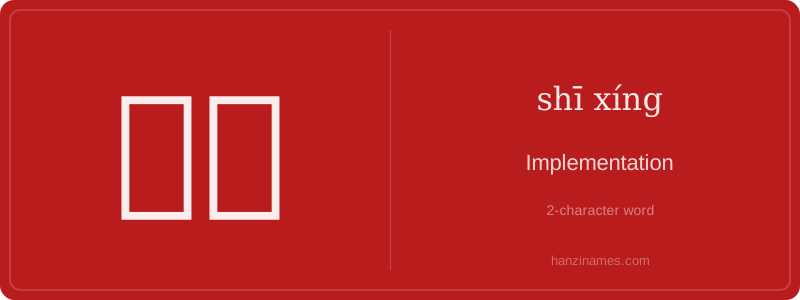
施行 refers to the act of implementing or carrying out a plan, law, or policy. It emphasizes the practical execution of something that has been established or decided upon.
The character 施 (shī) originally meant 'to give' or 'to bestow,' and it later came to mean 'to carry out' or 'to implement.' The character 行 (xíng) means 'to go,' 'to do,' or 'to act.' Together, 施行 conveys the idea of putting something into action or practice.
施行 is commonly used in formal contexts, such as government policies, legal systems, or organizational procedures. It reflects the importance of action and execution in Chinese culture, where ideas must be translated into tangible results. This term is often seen in official documents or discussions about governance and administration.