城外
How to Understand
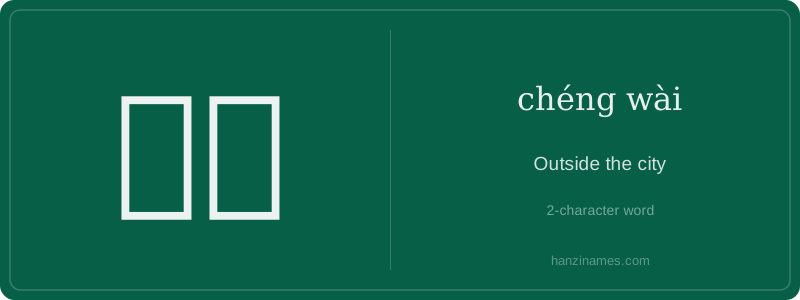
城外 (chéng wài) literally means 'outside the city.' It refers to the area beyond the walls or boundaries of a city, often used to describe locations or situations that are not within the urban center.
The character 城 (chéng) means 'city,' while 外 (wài) means 'outside' or 'external.' Together, they form a compound that clearly defines a location outside of an urban area. This term is commonly used in both geographical and metaphorical contexts.
城外 is often used in literature, travel descriptions, and daily conversations to indicate places like suburbs, rural areas, or regions that are not part of the main city. It can also be used in expressions like 城外有城 (there are cities beyond cities), which reflects the idea of hidden or distant places beyond the known world.