产卵
How to Say
👀 0
How to Write
Meaning: egg-laying
How to Understand
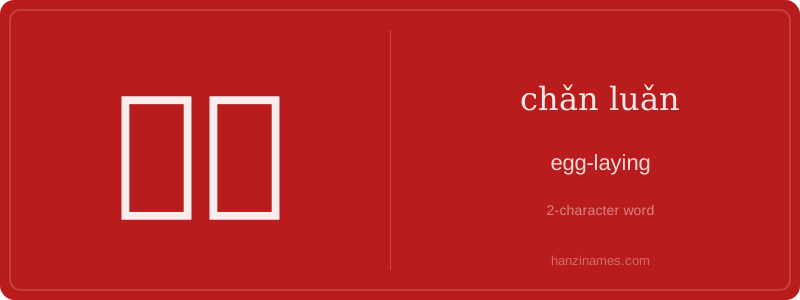
产卵
产卵 refers to the biological process of laying eggs, typically used for animals such as fish, insects, or birds. It is distinct from other reproductive methods like live birth and emphasizes the act of producing and depositing eggs.
The character 产 (chǎn) means 'to produce' or 'to give birth,' while 卵 (luǎn) means 'egg.' Together, they form a compound that directly translates to 'egg-laying,' highlighting the reproductive function of certain animals.
In Chinese culture, 产卵 is often discussed in contexts related to biology, ecology, and farming. For example, farmers might monitor the egg-laying habits of chickens or fish to manage breeding cycles. The term is also used in scientific discussions about animal behavior and reproduction.
Example Sentences
鸟类在春天开始产卵。
Birds begin to lay eggs in spring.
这条鱼每天产卵多次。
This fish lays eggs multiple times a day.