头顶
How to Understand
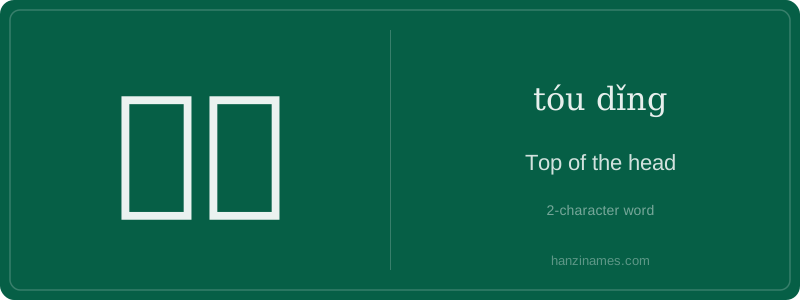
头顶 refers to the top part of the head, typically the area just above the forehead. It is a literal term used to describe the physical location on a person's head, and it can also be used metaphorically in some contexts.
The character 头 (tóu) means 'head,' and 顶 (dǐng) means 'top' or 'summit.' Together, they form a compound that literally translates to 'top of the head.' This combination reflects the physical position of the term and is widely understood in Chinese culture.
In daily use, 头顶 is commonly used in descriptions of body parts, such as in medical terms, fashion (e.g., haircuts), or in idiomatic expressions. It is also used in phrases like “头顶上” (tóudǐng shàng), meaning 'on top of the head,' which can have figurative meanings depending on context.