图书馆
How to Understand
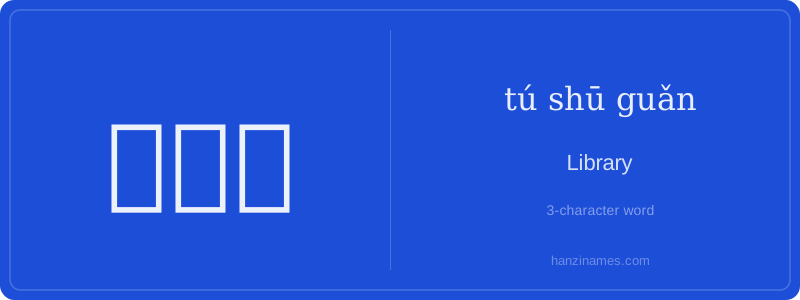
图书馆 (tú shū guǎn) is the most common Chinese term for 'library,' referring to a building or institution that houses a collection of books, periodicals, and other materials for public or private use. It differs from similar terms like 书店 (shū diàn), which means 'bookstore,' in that a library is typically a public space for reading and borrowing materials rather than purchasing them.
The word is composed of three characters: 图 (tú), meaning 'picture' or 'map'; 书 (shū), meaning 'book'; and 馆 (guǎn), meaning 'building' or 'hall.' Together, they literally translate to 'book building' or 'place for books,' reflecting its purpose as a repository for written works.
Libraries are culturally significant in China, serving as centers for learning, research, and community activities. Many libraries offer free access to resources, internet, and study spaces. In daily life, people often visit libraries to borrow books, study, or attend cultural events. A common expression is 去图书馆 (qù tú shū guǎn), meaning 'go to the library.'