大众
How to Understand
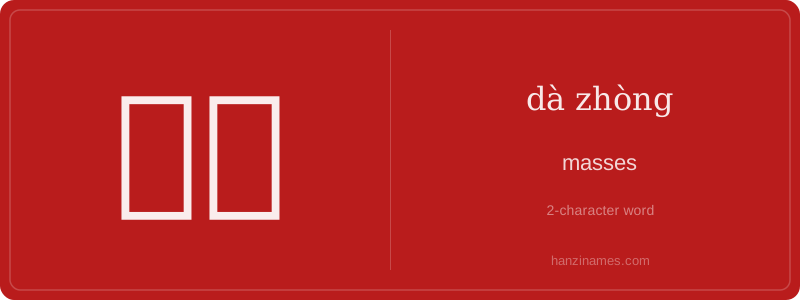
大众 refers to the general public or the majority of people. It emphasizes a large group of individuals rather than specific or individualized groups, often used in contexts like mass culture, mass production, or public opinion.
The character 大 (dà) means 'big' or 'large,' and 众 (zhòng) means 'many' or 'numerous.' Together, they convey the idea of a large collective, which is commonly used in both formal and informal contexts to refer to the general population.
In modern Chinese, 大众 is often seen in terms like 大众文化 (dàzhòng wénhuà, mass culture) or 大众汽车 (dàzhòng qìchē, Volkswagen). It's also used in marketing and media to describe products or services aimed at the general public. Understanding this term helps learners grasp how Chinese language discusses societal trends and consumer behavior.