违反
How to Say
👀 0
How to Write
Meaning: violate
How to Understand
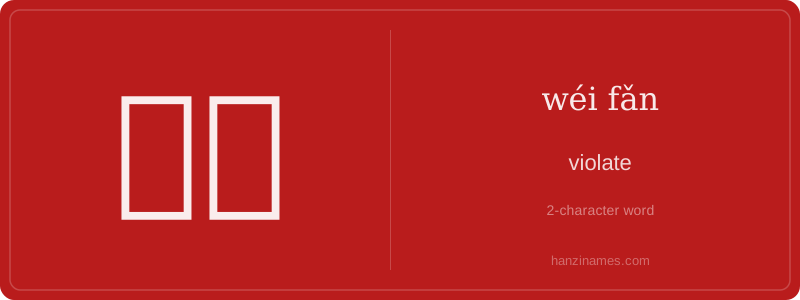
违反
违反 means 'to violate' or 'to break' something, typically a rule, law, or regulation. It implies an intentional or unintentional act of going against established guidelines or norms.
The character 违 (wéi) originally meant 'to deviate' or 'to go against,' while 反 (fǎn) means 'to oppose' or 'to reverse.' Together, they convey the idea of breaking or opposing something set in place.
违反 is commonly used in legal, social, and formal contexts. It appears in phrases like 违反法律 (violate the law) or 违反规定 (violate the rules). Understanding this term is essential for grasping concepts related to laws, ethics, and social conduct in Chinese society.
Example Sentences
他违反了公司的规定,被开除了。
He violated the company's rules and was fired.
这个行为严重违反了交通规则。
This behavior seriously violated traffic regulations.