首辅
How to Understand
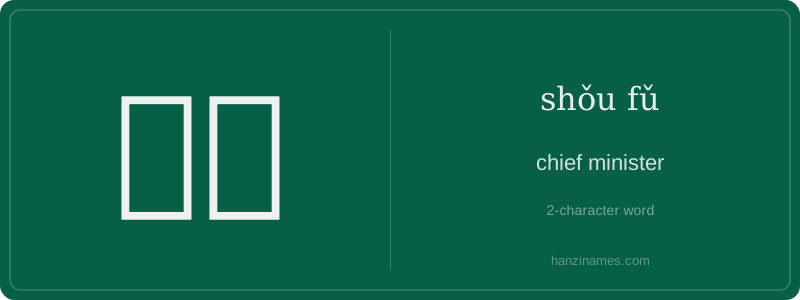
首辅 refers to the highest-ranking minister or chief advisor in the Chinese imperial government, particularly during the Ming and Qing dynasties. It is a title that signifies the leader of the cabinet and the person with the most influence over imperial decisions.
The character 首 (shǒu) means 'first' or 'primary,' while 辅 (fǔ) means 'assist' or 'adviser.' Together, they convey the idea of the principal adviser or chief minister who assists the emperor in governing the state.
Historically, the role of 首辅 was crucial in shaping policy and maintaining stability. The position was often held by highly educated officials who had passed the rigorous civil service exams. Today, the term is used primarily in historical contexts or in discussions about traditional Chinese governance structures.