义军
How to Understand
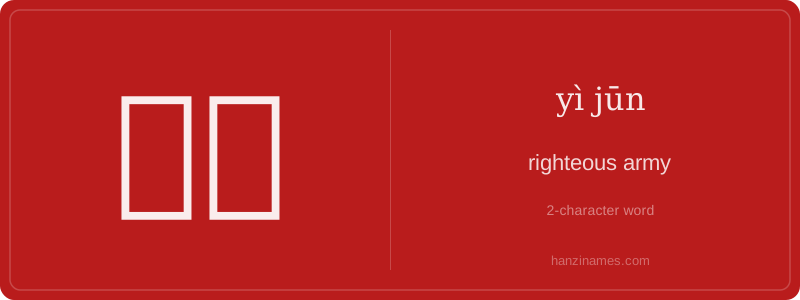
义军 refers to a group of people who fight for justice or a righteous cause, often in a historical or revolutionary context. It is commonly used to describe armed forces that are motivated by moral or ethical principles rather than personal gain or political power.
The character 义 (yì) means 'righteousness' or 'justice,' while 军 (jūn) means 'army' or 'military.' Together, they form a term that emphasizes the moral foundation of the group, distinguishing it from regular armies or mercenary forces.
义军 is often seen in historical narratives, especially in Chinese history, referring to groups like the Taiping Army or other rebel forces that claimed to act on behalf of the people. It carries a strong sense of idealism and resistance against oppression, making it a significant term in discussions of Chinese political and military history.