透明
How to Understand
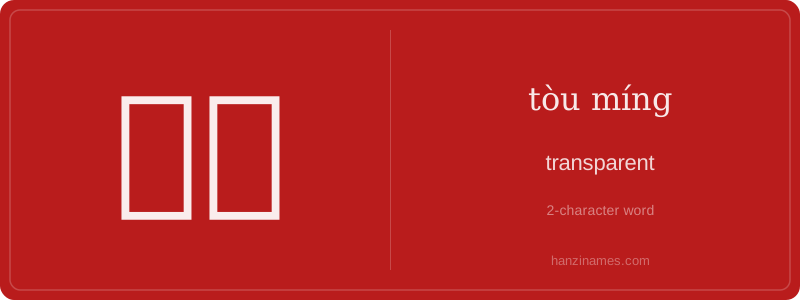
透明 means 'transparent' in English, describing something that allows light to pass through and makes objects behind it clearly visible. It is often used to describe physical materials like glass or water, but can also be metaphorical, such as in 'transparent policies' meaning clear and open practices.
The character 透 (tòu) originally meant 'to penetrate' or 'to go through,' suggesting clarity or visibility. 明 (míng) means 'bright' or 'clear,' reinforcing the idea of transparency. Together, they convey the concept of clarity and openness, both literal and figurative.
Transparent is commonly used in contexts like business, government, and technology to emphasize openness and honesty. In Chinese culture, transparency is valued in leadership and public institutions. Related expressions include 透明化 (tòumíng huà), meaning 'to make transparent,' and 透明度 (tòumíng dù), meaning 'transparency level.'