孩儿
How to Understand
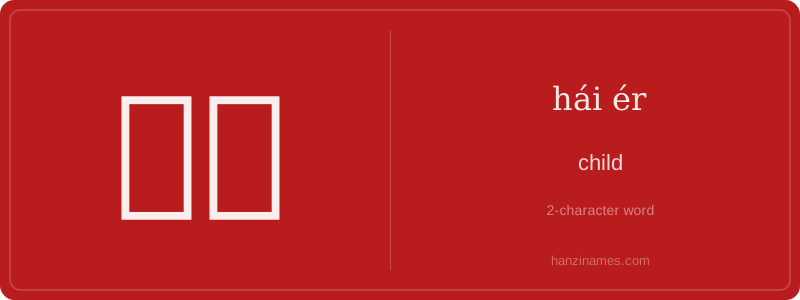
孩儿 (hái ér) is a term used to refer to a child, often with a sense of affection or endearment. It is similar to the English word 'child' but carries a more intimate and personal tone, frequently used by parents or in close family settings.
The character 孩 (hái) means 'child' or 'offspring,' while 儿 (ér) literally means 'son' or 'child.' Together, they form a compound that emphasizes the relationship between parent and child, with 儿 adding a sense of closeness or intimacy.
While commonly used in northern China, 孩儿 is also understood throughout the Chinese-speaking world. It is often used in literature, poetry, and everyday speech to express warmth and affection toward children. It is not typically used in formal writing but appears frequently in spoken language and informal contexts.