含义
How to Understand
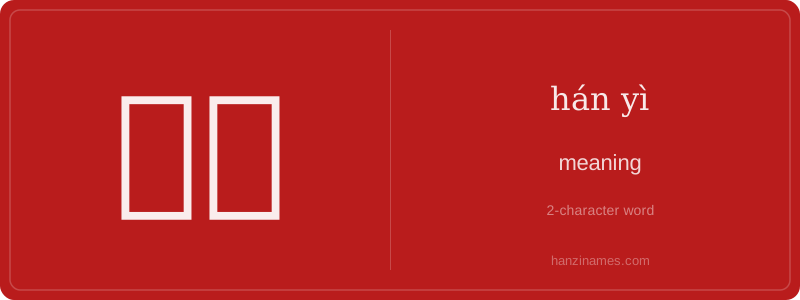
含义 refers to the meaning or significance of a word, phrase, or concept. It emphasizes the intended interpretation rather than literal translation, often used in contexts like literature, language learning, or cultural analysis.
The character 含 (hán) means 'to contain' or 'to imply,' while 义 (yì) means 'righteousness,' 'meaning,' or 'significance.' Together, they form a term that conveys the deeper or implied meaning behind something, rather than its surface-level definition.
含义 is commonly used in academic, literary, and conversational settings. For example, when analyzing a poem or a proverb, people might discuss its 含义 to understand its underlying message. It's also useful in cross-cultural communication, where direct translations may not capture the full intent.