含
Character Story & Explanation
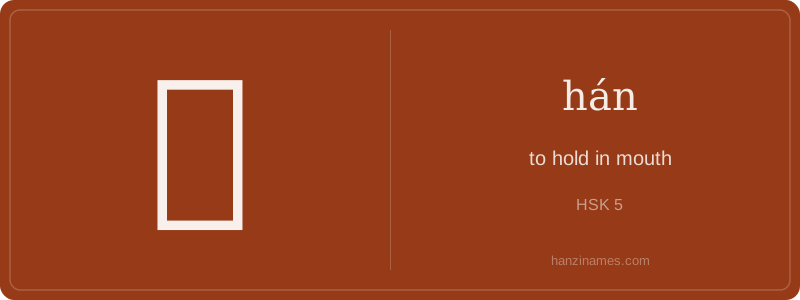
含 has been used continuously since at least the Warring States period (475–221 BCE) in bronze inscriptions and early texts like the *Zuo Zhuan*, where it appears in phrases describing restrained speech or concealed intent. Today, it’s essential in formal writing and HSK 5 vocabulary — appearing in common expressions like 含笑 (hán xiào, ‘to smile gently, with quiet joy’) and idioms such as 含辛茹苦 (hán xīn rú kǔ, ‘to endure hardship silently’). It’s also central to literary aesthetics — Chinese poetry values 含蓄, where meaning lingers beneath the surface.
The character is not a pictograph but a phono-semantic compound: 口 (semantic, indicating mouth-related action) + 今 (jīn, phonetic component, hinting at pronunciation). While 今 originally meant ‘now’, here it serves mainly for sound. In daily life, Chinese speakers use 含 when describing subtle emotional states — e.g., 含泪 (hán lèi, ‘with tears held in the eyes’) — evoking restraint and depth.
Hello students! Let’s explore 含 (hán), a character that literally means ‘to keep in the mouth’ — like holding something gently without swallowing or speaking. It’s not about eating, but about containment: a pause, a hint, a subtle presence. Though simple (just 7 strokes!), it carries rich nuance — often implying something implied, unspoken, or quietly present, like emotion held back or meaning embedded within words.
This character belongs to the 口 (kǒu, ‘mouth’) radical family, which includes characters related to speech, taste, and oral action — think 味 (wèi, ‘taste’), 听 (tīng, ‘to listen’), and 叫 (jiào, ‘to call’). Notice how the 口 appears on the left? That’s your visual anchor — reminding you this character is rooted in oral or expressive activity.
While its core meaning is physical (holding in the mouth), 含 is most often used abstractly in modern Chinese — especially in formal or literary contexts. You’ll see it in words like 含义 (hányì, ‘meaning’) and 含蓄 (hánxù, ‘implicit, reserved’). Think of it as ‘semantic containment’: the idea isn’t shouted — it’s held, suggested, and felt.
Example Sentences
Common Compounds
Similar Characters — Don't Mix These Up
Your First Step into Chinese Culture: Get a Chinese Name
Every journey into Chinese begins with a name. Use our free Chinese name generator to create a meaningful, personalized Chinese name that fits you perfectly.
Get My Chinese Name →