心脏
How to Understand
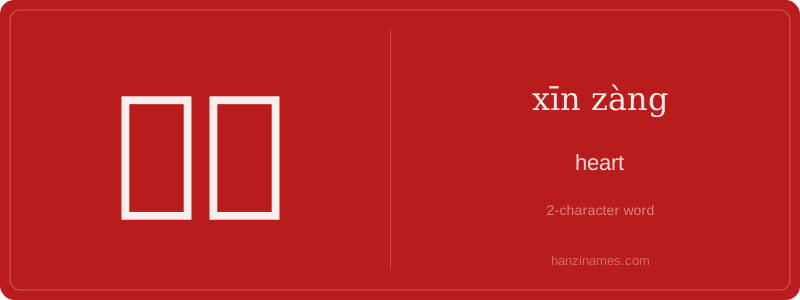
心脏 (xīn zàng) refers to the physical heart, the muscular organ that pumps blood throughout the body. It is commonly used in medical or biological contexts and can also be used metaphorically to represent emotions or courage.
The character 心 (xīn) means 'heart' or 'mind,' while 脏 (zàng) refers to internal organs. Together, they literally mean 'heart organ,' distinguishing it from other organs. This compound reflects the traditional Chinese understanding of the body's internal systems.
In daily use, 心脏 is often seen in medical terminology, such as 心脏病 (xīn zàng bìng), meaning 'heart disease.' Culturally, the heart is also associated with emotions and feelings, similar to Western traditions. For example, 拼尽全力 (pīn jìn quán lì) — 'to give one's all' — is sometimes linked to the heart's strength.