杰出
How to Say
👀 0
How to Write
Meaning: Outstanding
How to Understand
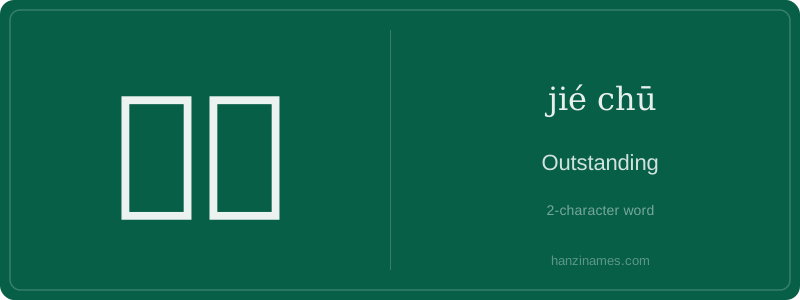
杰出
杰出 means 'outstanding' or 'remarkable,' often used to describe someone or something that is exceptionally good or impressive. It emphasizes excellence and achievement beyond the ordinary.
The character 杰 (jié) originally meant 'excellent' or 'superior,' while 出 (chū) means 'to come out' or 'to emerge.' Together, they convey the idea of something or someone that stands out as exceptional.
杰出 is commonly used in formal contexts, such as praising someone's achievements, talents, or contributions. It is often seen in academic, professional, or cultural settings, and can be applied to people, works, or ideas that are considered remarkable.
Example Sentences
他是一位杰出的科学家。
He is an outstanding scientist.
这是一部杰出的艺术作品。
This is an outstanding work of art.