排除
How to Understand
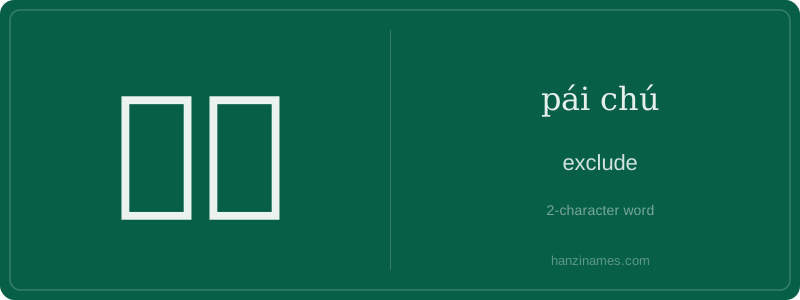
排除 means 'to exclude' or 'to eliminate' in English. It refers to the action of removing something from consideration, a group, or a situation. It is often used in logical or systematic contexts, such as problem-solving or decision-making.
The character 排 (pái) originally meant 'to arrange in order' or 'to push aside,' while 除 (chú) meant 'to remove' or 'to eliminate.' Together, they form a compound that conveys the idea of systematically removing or excluding something.
排除 is commonly used in formal and academic settings, such as in logic, science, or legal discussions. It can also appear in everyday language when discussing decisions or filtering options. A related phrase is 排除法 (pái chú fǎ), meaning 'method of exclusion' or 'elimination method.'