外地
How to Understand
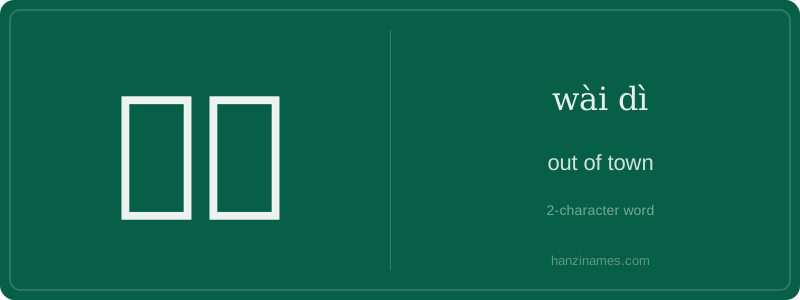
外地 refers to a place outside one's hometown or local area, often used to describe locations that are not the speaker's own region. It contrasts with 内地 (nèi dì), which means 'the interior' or 'mainland,' typically referring to the central or core area of a country.
The character 外 (wài) means 'outside' or 'external,' while 地 (dì) means 'place' or 'ground.' Together, they form a term that conveys a sense of distance or difference from one's own local environment.
In daily use, 外地 is commonly used in contexts such as travel, work, or migration. For example, someone might say they are working in 外地 to indicate they are employed in a different city or province. It also appears in phrases like 外地人 (wài dì rén), meaning 'a person from out of town' or 'outsider.'