如果说
How to Understand
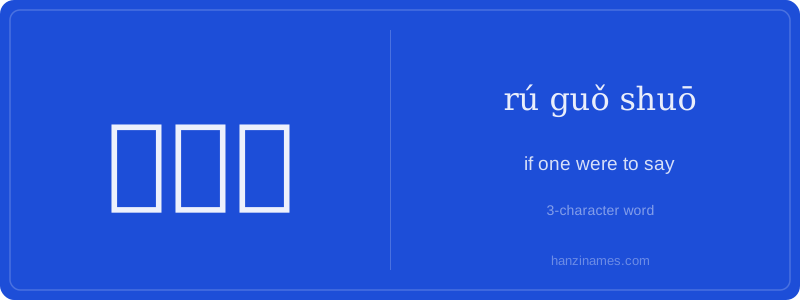
如果说 is a conjunction used to introduce a hypothetical or conditional statement, often translating to "if one were to say" or "if someone were to claim." It is commonly used in discussions about possibilities, opinions, or hypothetical scenarios.
The character 如 (rú) means "as" or "like," 果 (guǒ) means "fruit," and 说 (shuō) means "to speak" or "to say." While the literal meaning of the characters doesn't directly translate to the phrase's meaning, the combination forms a common expression for hypothetical conditions.
如果说 is frequently used in both formal and informal contexts, especially in debates, academic discussions, or when exploring different perspectives. It allows speakers to express ideas without making definitive claims, which is culturally valued in Chinese communication.