对比
How to Understand
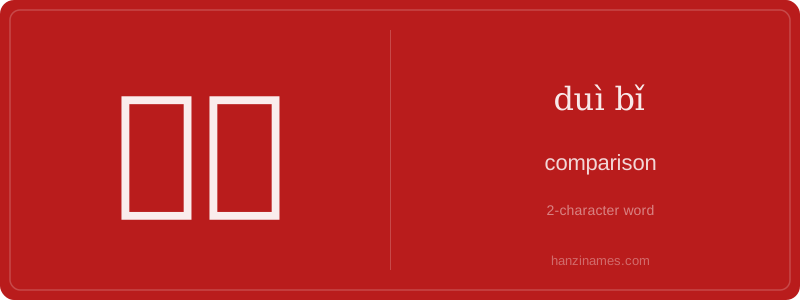
对比 means 'comparison' in English. It refers to the act of examining two or more things to identify similarities and differences. Unlike synonyms like 'contrast,' which often highlights differences, 对比 can include both similarities and differences, making it a more neutral term.
The character 对 (duì) originally meant 'correct' or 'opposite,' and later came to mean 'toward' or 'in relation to.' 比 (bǐ) means 'to compare' or 'to match.' Together, they form a word that literally means 'to compare' or 'in comparison.'
对比 is widely used in academic, business, and everyday contexts. For example, in research, you might see 对比 studies. In daily life, people use it when discussing different products, styles, or ideas. It is also common in education, where students are asked to do 对比 between historical events or literary works.