不等
How to Say
👀 0
How to Write
Meaning: not equal
How to Understand
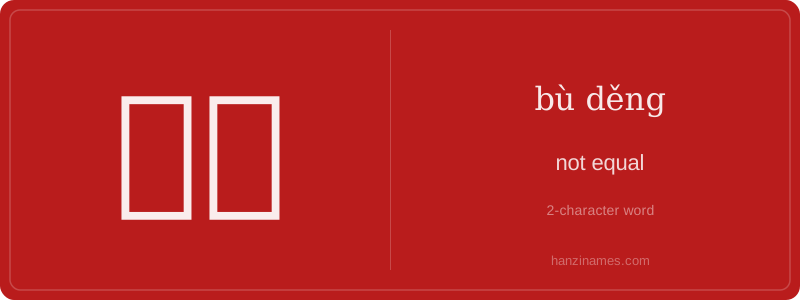
不等
不等 (bù děng) means 'not equal' or 'unequal.' It describes a situation where two or more things are not the same in quantity, quality, or value. Unlike similar terms such as 'different,' which focuses on distinction, 不等 emphasizes the lack of equality.
The character 不 (bù) means 'not,' and 等 (děng) means 'equal' or 'to be equal.' Together, they form a negation of equality, indicating imbalance or disparity.
不等 is commonly used in mathematical contexts, comparisons, and discussions about fairness or justice. It can also appear in idiomatic expressions or in everyday language to highlight differences in treatment, results, or conditions.
Example Sentences
他们的成绩不等。
Their scores are not equal.
这个规则对所有人不等。
This rule is not equal for everyone.