未免
How to Understand
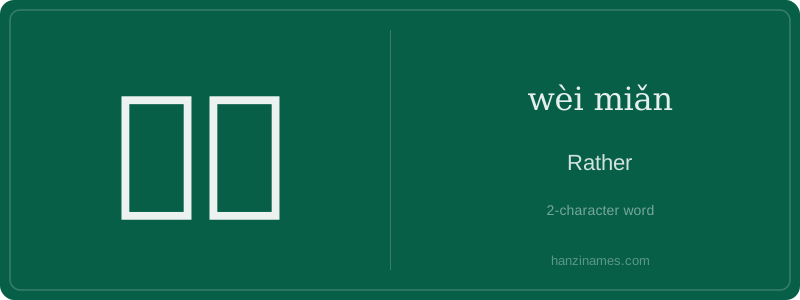
未免 (wèi miǎn) is an adverb used to express a sense of exaggeration or overstatement, often implying that something is somewhat excessive or surprising. It can be translated as 'rather' or 'somewhat,' and is commonly used in conversational Chinese to soften a statement or highlight an unexpected situation.
The character 未 (wèi) means 'not yet,' while 免 (miǎn) means 'to avoid' or 'to refrain from.' Together, 未免 suggests a situation that is not entirely avoidable or that has a degree of inevitability, but with a tone of mild surprise or emphasis.
It is often used in expressions like 未免太... (wèi miǎn tài...) meaning 'rather too...' or 'somewhat too...' to express mild disapproval or astonishment. This phrase is frequently used in daily conversation to convey a nuanced opinion without being overly direct.