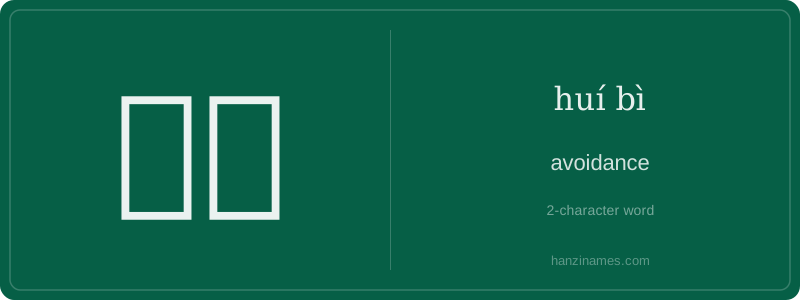
回避
How to Say
👀 0
How to Write
Meaning: avoidance
How to Understand
回避
回避 refers to the act of avoiding or steering clear of something, often due to discomfort, conflict, or a desire to prevent negative consequences. It emphasizes intentional distance rather than mere absence.
The character 回 (huí) means 'to return' or 'to turn back,' while 避 (bì) means 'to avoid' or 'to evade.' Together, they convey the idea of turning away from a situation or person, suggesting a deliberate choice to remove oneself from a potentially problematic scenario.
回避 is commonly used in both formal and informal contexts, such as in legal, social, or professional settings. It can imply politeness, caution, or even avoidance of responsibility. In Chinese culture, it is often seen as a sign of tact or self-preservation.
Example Sentences
他在会议上回避了那个敏感的话题。
He avoided the sensitive topic during the meeting.
她选择回避与前任的联系,以保护自己的情感。
She chose to avoid contact with her ex to protect her feelings.