没法
How to Understand
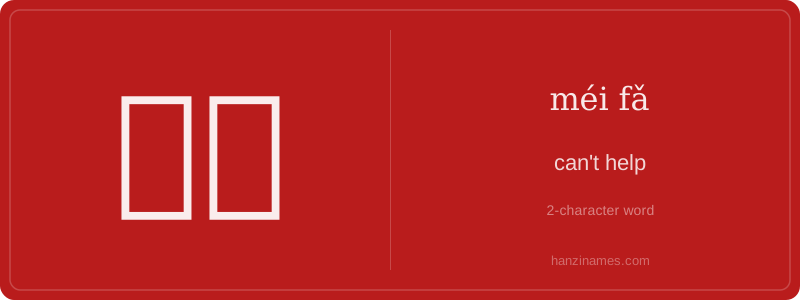
没法 is a verb phrase that means 'can't help' or 'is unable to do something.' It expresses an inability or lack of control over a situation, often implying frustration or inevitability.
The character 没 (méi) means 'not' or 'no,' and 法 (fǎ) originally meant 'method' or 'way.' Together, they form a phrase that conveys the idea of being without a way or method to prevent or avoid something. This combination reflects the concept of helplessness or inability in Chinese language and thought.
没法 is commonly used in daily conversation to express that one cannot stop something from happening, such as a feeling or action. It appears in expressions like “没法控制” (can't control) or “没法避免” (can't avoid). Understanding this phrase helps learners grasp how Chinese speakers express limitations and emotions related to helplessness.