进出
How to Understand
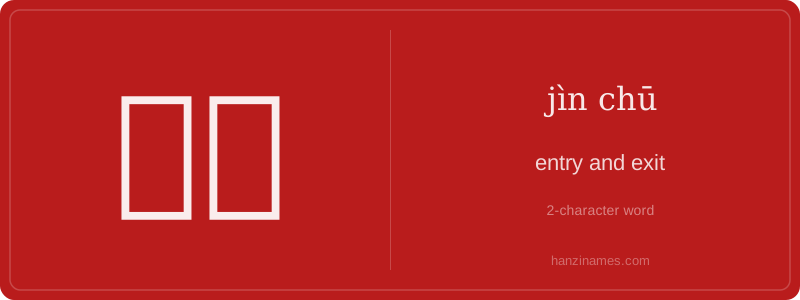
进出 refers to the action or process of entering and exiting a place, often used in contexts related to movement, access, or logistics. It emphasizes the dual direction of movement, distinguishing it from single-direction terms like 'enter' or 'exit' alone.
The character 进 (jìn) means 'to enter' or 'to advance,' while 出 (chū) means 'to exit' or 'to go out.' Together, they form a compound that captures the idea of going in and out, often implying regulated or controlled access.
进出 is commonly used in official or formal settings, such as in airports, buildings, or border controls. It also appears in daily conversations when discussing people or goods moving in and out of a location. Understanding this term helps learners grasp directional concepts in Chinese more effectively.