全然
How to Understand
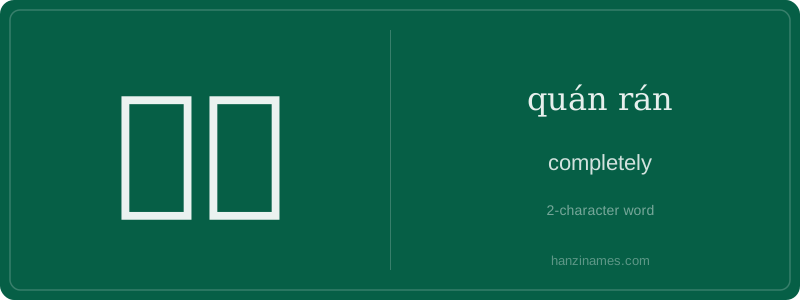
全然 means 'completely' or 'entirely' in English, used to emphasize the full extent of something. It often conveys a strong sense of certainty or absoluteness, differentiating it from more neutral expressions like 'very' or 'quite.'
The character 全 (quán) means 'all' or 'entire,' while 然 (rán) is a classical particle that often functions as a suffix to indicate a state or condition. Together, they form a term that emphasizes total or absolute completion or presence.
全然 is commonly used in formal and literary contexts, often in written Chinese rather than spoken language. It appears in phrases like 全然不知 (quán rán bù zhī), meaning 'completely unaware,' and 全然无损 (quán rán wú sǔn), meaning 'entirely undamaged.' Learners should note its somewhat elevated tone and use it appropriately in writing or formal speech.