单个
How to Say
👀 0
How to Write
Meaning: individual
How to Understand
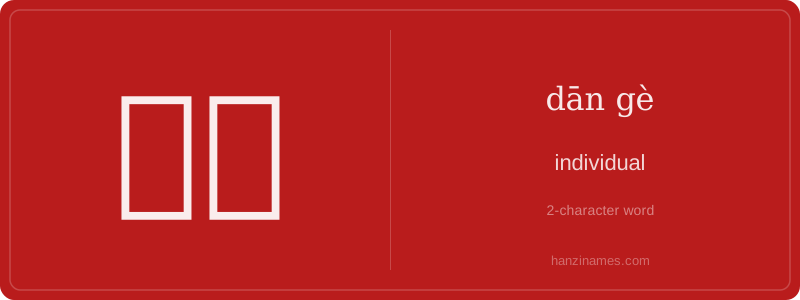
单个
单个 means 'individual' or 'single' in English. It refers to one distinct item or person, emphasizing separateness from a group or collection.
The character 单 (dān) originally meant 'single' or 'only,' and 个 (gè) is a measure word often used for people or objects. Together, they form a term that highlights singularity or individuality.
单个 is commonly used in everyday speech to refer to a single unit, such as a person, object, or instance. It is especially useful when contrasting with groups or multiples, and it appears frequently in contexts like counting, describing items, or emphasizing uniqueness.
Example Sentences
他喜欢和单个人交流,而不是在人群中说话。
He prefers to communicate with individuals rather than speaking in a crowd.
这个商店只卖单个的物品,不零售成套的。
This store sells only individual items, not sets.