改良
How to Understand
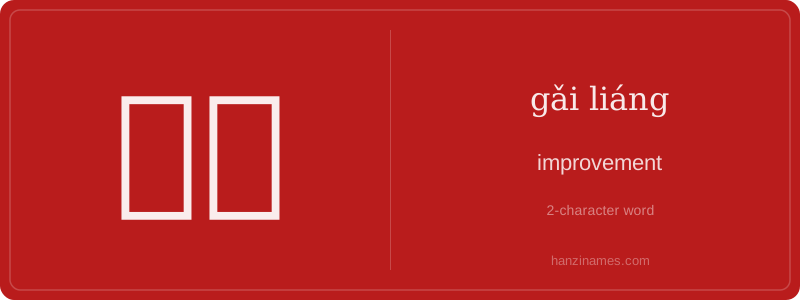
改 (gǎi) means 'to change' or 'to reform,' and 良 (liáng) means 'good' or 'superior.' Together, 改良 (gǎi liáng) refers to the process of improving or enhancing something, often through modification or refinement. It is commonly used in contexts such as agriculture, technology, or social systems.
The character 改 emphasizes the idea of transformation or change, while 良 highlights the positive outcome of that change. This combination suggests a deliberate effort to make something better, rather than just altering it superficially.
改良 is widely used in modern Chinese society, especially in discussions about agricultural practices, product development, and policy reforms. It reflects a cultural emphasis on progress and optimization, often seen in both governmental and private sectors.