况且
How to Understand
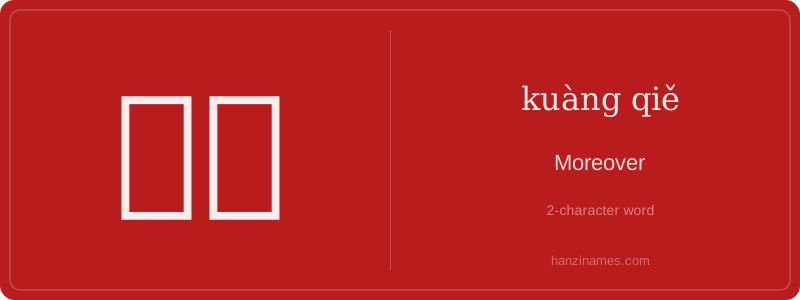
况且 (kuàng qiě) is a conjunction used to add an additional point or argument, often translated as 'moreover,' 'furthermore,' or 'in addition.' It is commonly used in spoken and written Chinese to introduce a supplementary idea that supports or strengthens the previous statement.
The character 况 (kuàng) originally meant 'circumstance' or 'situation,' and it can also imply 'moreover' or 'besides.' The character 且 (qiě) means 'and' or 'also,' and together they form a compound that emphasizes adding another point. This phrase has roots in classical Chinese and is widely used in modern speech.
况且 is often used in persuasive writing or conversation to reinforce an argument. It is important to note that it is not always interchangeable with other conjunctions like 而且 (ér qiě), which is more neutral. In daily use, it adds a sense of emphasis or logical progression to the discussion.