老夫
How to Say
👀 0
How to Write
Meaning: old man
How to Understand
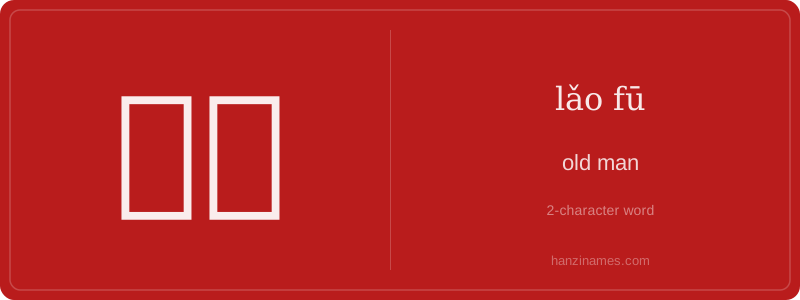
老夫
老夫 (lǎo fū) is a first-person pronoun meaning 'old man' or 'I (as an elderly person)'. It is used to refer to oneself in a humble or traditional manner, often in literary or formal contexts.
The character 老 (lǎo) means 'old', and 夫 (fū) originally meant 'adult male' or 'husband'. Together, they form a self-referential term that conveys age and humility, often used in classical Chinese literature or by older individuals to express modesty.
老夫 is rarely used in modern spoken Chinese but appears in historical texts, poetry, or formal writings. It can also be used humorously or archaically to add a traditional tone to speech or writing.
Example Sentences
老夫年逾古稀,仍好读书。
Old man, over seventy years old, still likes to read books.
老夫今日得闲,邀君共饮。
Old man, today I have time, let's drink together.