持久
How to Say
👀 0
How to Write
Meaning: Lasting
How to Understand
持久
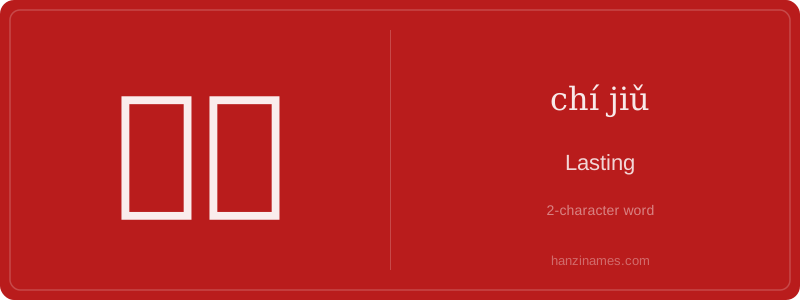
持久 means 'lasting' or 'sustained,' describing something that endures over time without fading. It emphasizes endurance and long-term stability, often used to describe relationships, effects, or conditions that remain consistent.
The character 持 (chí) originally meant 'to hold' or 'to maintain,' while 久 (jiǔ) means 'long' or 'long-lasting.' Together, they form a compound that conveys the idea of maintaining something over an extended period, suggesting strength and perseverance.
持久 is commonly used in contexts such as love, friendship, or environmental sustainability. For example, it can describe a lasting friendship or a sustainable resource. It is also used in formal or literary contexts to emphasize durability and resilience.
Example Sentences
他们的友谊持续了三十年。
Their friendship lasted thirty years.
这种材料具有持久的耐用性。
This material has lasting durability.