声势
How to Say
👀 0
How to Write
Meaning: military might
How to Understand
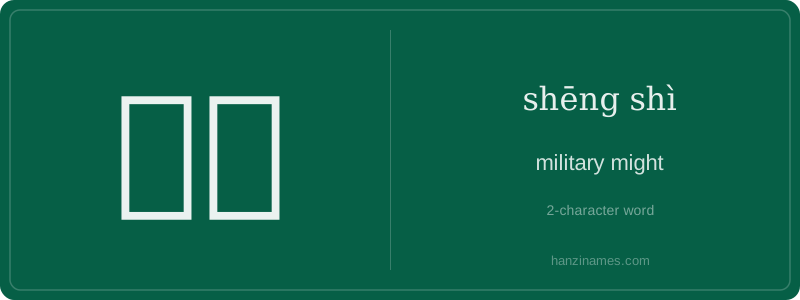
声势
声势 refers to the power, influence, or momentum behind a force, often used to describe military strength, public demonstrations, or a strong presence. It emphasizes the visible or audible impact of something, such as an army's advance or a protest's energy.
The character 声 (shēng) means 'sound' or 'voice,' and 势 (shì) means 'trend' or 'momentum.' Together, they create a term that conveys the combined effect of sound and force, suggesting a powerful and noticeable presence.
声势 is commonly used in both historical and modern contexts, such as describing the strength of an army, the impact of a movement, or the intensity of a public event. It is often used in literature and media to convey a sense of grandeur or authority.
Example Sentences
敌军的声势浩大,让守军不敢轻举妄动。
The enemy's military might was so great that the defending forces dared not act rashly.
这次示威活动的声势很大,引起了广泛关注。
The momentum of this protest was significant, drawing widespread attention.