难民
How to Say
👀 0
How to Write
Meaning: refugee
How to Understand
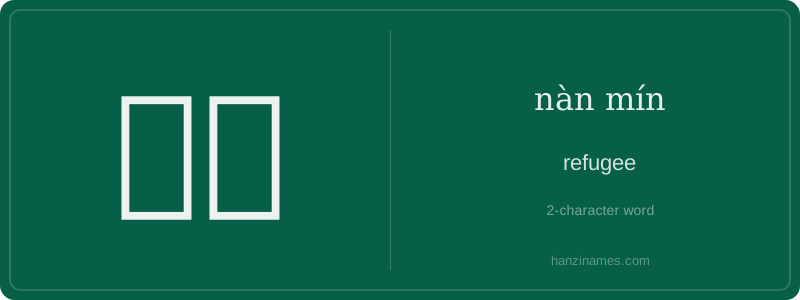
难民
难民 (nàn mín) refers to a person who has been forced to leave their home country due to war, persecution, or other life-threatening circumstances. It is often used in the context of international migration and humanitarian crises.
The character 难 (nán) means 'difficulty' or 'suffering,' while 民 (mín) means 'people' or 'citizen.' Together, they form a term that literally translates to 'people in hardship' or 'suffering people.'
Refugees are often protected under international law, such as the 1951 Refugee Convention. The term is commonly used in news reports, policy discussions, and human rights advocacy. Understanding the distinction between refugees and other types of migrants is important for accurate communication.
Example Sentences
战争导致许多人成为难民。
War has made many people become refugees.
政府正在为难民提供临时住所。
The government is providing temporary housing for refugees.