态势
How to Understand
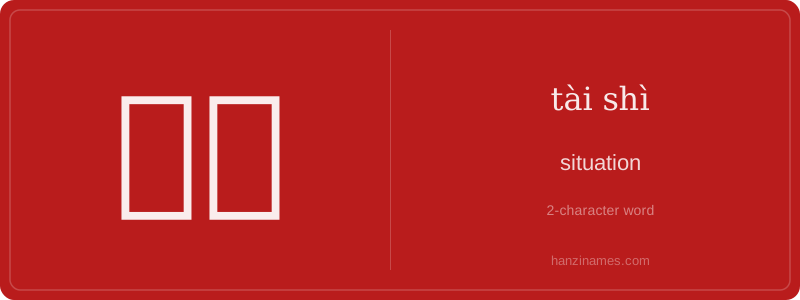
势 (shì) means 'situation' or 'circumstance,' and 态 (tài) is an archaic or poetic form of 'state' or 'condition.' Together, 怃势 refers to the overall state or condition of a situation, often implying a dynamic or evolving scenario.
The character 怄 (tài) is an older variant of 态, which itself is a less common form of 态. 势 (shì) literally means 'power' or 'tendency,' and when combined with 怄, it suggests a broader sense of context or environment. This term is more commonly seen in classical texts or formal writing rather than everyday speech.
While the word is not used as frequently in modern Mandarin, it can still appear in literature, politics, or formal discussions about social or economic conditions. It is often used to describe the broader context in which events occur, making it useful for analyzing trends or developments.