在位
How to Understand
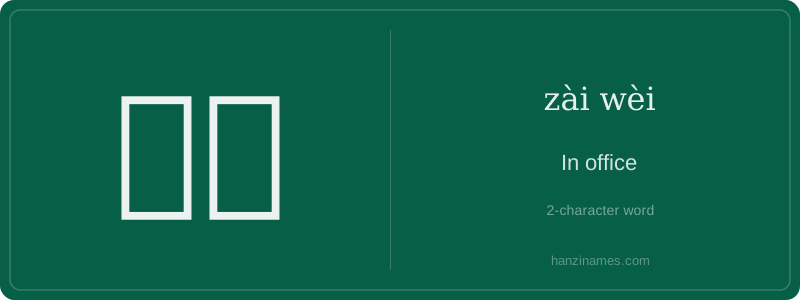
在位 refers to a person who is currently holding a position or office, especially in a formal or official capacity. It emphasizes the current status of someone occupying a role, often used for political leaders, officials, or individuals in positions of authority.
The character 在 (zài) means 'at' or 'in,' and 位 (wèi) means 'position' or 'post.' Together, 在位 literally translates to 'in position' or 'in office,' indicating someone who is actively serving in their role.
在位 is commonly used in political contexts, such as discussing a president's term in office or a leader's tenure. It can also be used more broadly for anyone holding a specific position within an organization or institution. Understanding this term helps learners grasp how Chinese speakers describe official roles and responsibilities.