后宫
How to Understand
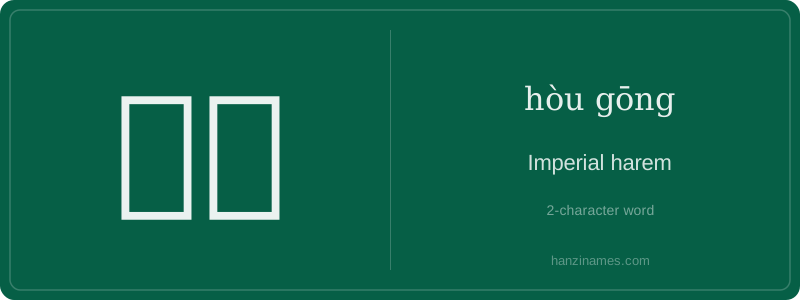
后宫 (hòu gōng) refers to the living quarters of a Chinese emperor's consorts and female attendants, often symbolizing the complex power dynamics within the imperial court. It is distinct from the broader concept of 'palace' as it specifically denotes the private, restricted areas where the emperor's wives and concubines resided.
The character 后 (hòu) originally meant 'queen' or 'empress' and later came to mean 'rear' or 'back,' while 宫 (gōng) means 'palace' or 'court.' Together, they denote the innermost part of the palace, reserved for the emperor's family and female attendants.
Historically, 后宫 was more than just a physical space—it represented a world of intrigue, politics, and social hierarchy. Today, the term is often used in historical dramas and literature to evoke the opulence and complexity of imperial life in ancient China.