来时
How to Say
👀 0
How to Write
Meaning: when coming
How to Understand
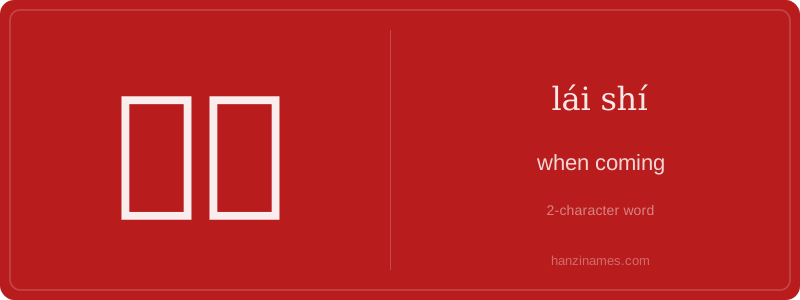
来时
"来时" (lái shí) refers to the time or moment when someone arrives or comes. It emphasizes the specific point in time of arrival, often used in contrast with departure or the time before arrival.
The character "来" (lái) means 'to come' or 'arrival,' while "时" (shí) means 'time' or 'moment.' Together, they form a noun that highlights the temporal aspect of an arrival event.
In daily use, "来时" is commonly found in narratives or descriptions of travel, meetings, and events. It can also be used in more abstract contexts, such as reflecting on past experiences or planning future visits. Understanding this phrase helps learners grasp how Chinese expresses time in relation to actions like arrival.
Example Sentences
他来时天已经黑了。
He arrived when it was already dark.
我们来时,他们还没到。
When we arrived, they hadn't come yet.