未经
How to Say
👀 0
How to Write
Meaning: unauthorized
How to Understand
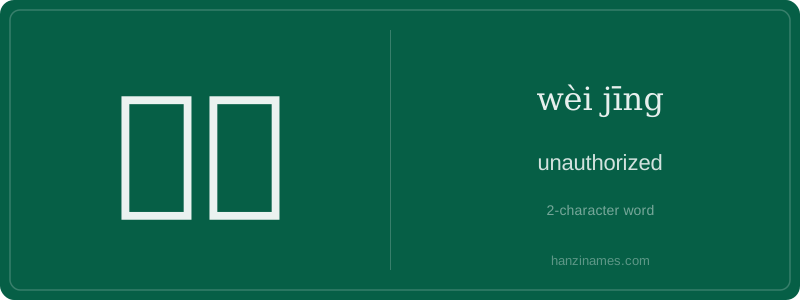
未经
未经 means 'unauthorized' or 'not having been through' in English. It is commonly used to describe actions, processes, or decisions that have not been approved or sanctioned by the appropriate authority.
The character 未 (wèi) means 'not yet' or 'un-', while 经 (jīng) means 'to go through' or 'to experience.' Together, 未经 suggests something that has not gone through a formal process or approval.
It is often used in legal, administrative, or formal contexts to indicate that an action has not been officially recognized. For example, it can be used to describe unauthorized use of a resource or an unapproved activity. Understanding 未经 helps learners grasp the importance of formal procedures in Chinese society.
Example Sentences
未经允许,他擅自进入了实验室。
He entered the laboratory without permission.
这份合同未经审核,不能签署。
This contract has not been reviewed and cannot be signed.