望远镜
How to Understand
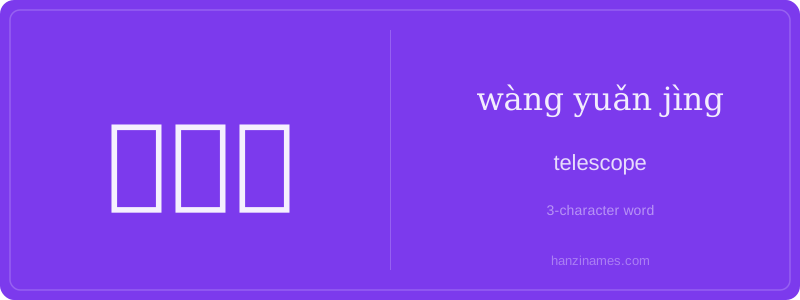
望远镜 (wàng yuǎn jìng) is the Chinese word for 'telescope,' a device used to observe distant objects, especially in astronomy. It literally translates to 'look far mirror,' emphasizing its function of magnifying and observing faraway things.
The character 望 (wàng) means 'to look' or 'to hope,' 远 (yuǎn) means 'far,' and 镜 (jìng) means 'mirror' or 'glass.' Together, they convey the idea of a tool that helps see faraway objects clearly, much like a mirror that reflects distant scenes.
望远镜 is commonly used in scientific, educational, and recreational contexts. In China, it is often associated with stargazing and astronomical research. It's also used in nature observation and military applications. A common expression is 用望远镜看星星 (yòng wàng yuǎn jìng kàn xīngxīng), meaning 'to look at stars with a telescope.'