望
Character Story & Explanation
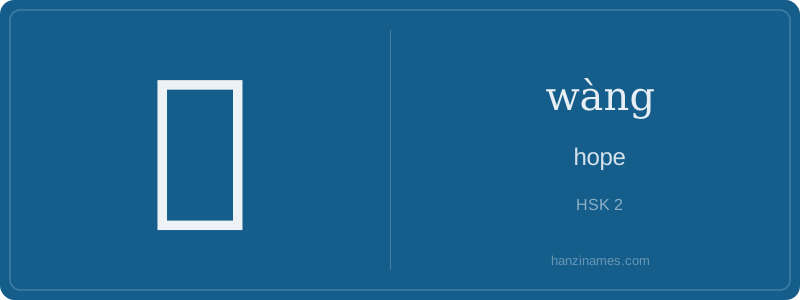
In traditional Chinese culture, the 15th day of each lunar month — when the moon is fullest — is called 望日 (wàngrì), a term documented since the Han Dynasty in astronomical records and imperial calendars. This usage remains standard in almanacs and lunar festival references today. Common phrases include 一望无际 (yī wàng wú jì, 'as far as the eye can see') and 众望所归 (zhòng wàng suǒ guī, 'the people's cherished expectation has been fulfilled').
The character 望 first appeared in seal script (c. 3rd century BCE), where its left side clearly depicts the moon (月), and the right side resembles 王 (wáng, 'king'), suggesting 'supreme observation' or 'authoritative gaze'. While not a literal pictograph of the full moon, its form reflects ancient associations between lunar cycles, timekeeping, and human aspiration — verified by bronze inscriptions and early dictionaries like the Shuōwén Jiězì (100 CE).
Hello students! The character 望 (wàng) is a Level 2 HSK word — very common and useful. Though its earliest meaning relates to the 'full moon', today it’s used far more often to mean 'to look forward to', 'to hope for', or 'to gaze at'. It appears in verbs, nouns, and compound words — think of it as the 'hope-gaze' character: combining vision and intention. Its radical 月 (moon) hints at its ancient lunar connection, while the right side (王) originally suggested 'sovereign' or 'supreme', reinforcing the idea of lofty aspiration.
Don’t be misled by the 'moon' radical — 望 isn’t about astronomy! In modern Mandarin, you’ll hear it daily: parents 望子成龙 (wàng zǐ chéng lóng, 'hope their child becomes a dragon') — a famous idiom expressing high parental expectations. It’s also used literally: to 'look into the distance' (e.g., 登高望远 dēng gāo wàng yuǎn). Notice how both meanings involve direction — either physical (gazing) or mental (hoping).
Remember: 望 is never used alone as a noun meaning 'full moon' in contemporary speech — that role belongs to 满月 (mǎnyuè). Instead, 望 functions almost exclusively as a verb or part of compounds. Pronounce it with the fourth tone (wàng), like a firm, falling command — matching its sense of determined looking or hoping. With just 11 strokes and clear structure, it’s a great character to practice writing and using in context!
Example Sentences
Common Compounds
Similar Characters — Don't Mix These Up
Your First Step into Chinese Culture: Get a Chinese Name
Every journey into Chinese begins with a name. Use our free Chinese name generator to create a meaningful, personalized Chinese name that fits you perfectly.
Get My Chinese Name →