收支
How to Say
👀 0
How to Write
Meaning: income and expenses
How to Understand
收支
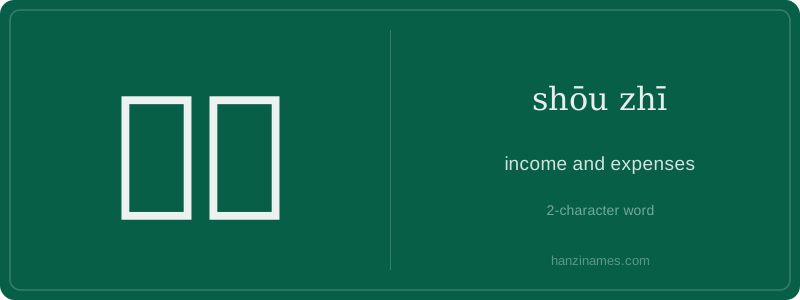
收支 refers to the total income and expenditures of a person, household, or organization. It is commonly used in financial contexts to describe the flow of money in and out.
The character 收 (shōu) means 'to receive' or 'to collect,' while 支 (zhī) means 'to spend' or 'to disburse.' Together, they form a compound that literally translates to 'income and expenses,' capturing the dual aspects of financial activity.
收支 is widely used in daily life, especially in budgeting, accounting, and personal finance. In Chinese culture, maintaining a healthy balance between income and expenses is considered important for financial stability. Related expressions include 财务收支 (financial income and expenses) and 收支平衡 (income-expense balance).
Example Sentences
他的月收入和支出都很明确。
His monthly income and expenses are clear.
公司需要详细记录每一笔收支。
The company needs to record every income and expense in detail.