阻力
How to Say
👀 0
How to Write
Meaning: resistance
How to Understand
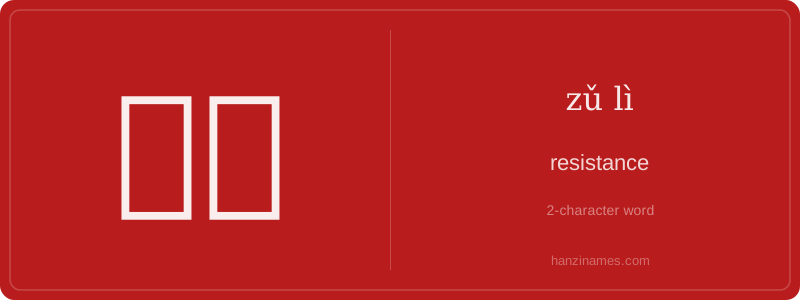
阻力
阻力 refers to resistance, often in a physical or metaphorical sense. It describes a force or condition that hinders progress, movement, or change. Unlike simple obstacles, 阻力 implies a more sustained or inherent opposition.
The character 阻 (zǔ) means 'to block' or 'to hinder,' and 力 (lì) means 'force' or 'power.' Together, they form a term that conveys a force working against motion or development.
In daily life, 阻力 is commonly used in physics contexts, such as air resistance or friction. It also appears in metaphors, like 'the resistance to change' in social or personal development. Understanding 阻力 helps grasp both scientific and abstract challenges in Chinese.
Example Sentences
跑步时,空气阻力是影响速度的重要因素。
When running, air resistance is an important factor affecting speed.
改革遇到很大阻力,需要耐心推动。
Reform has faced significant resistance and requires patience to advance.