恨不得
How to Understand
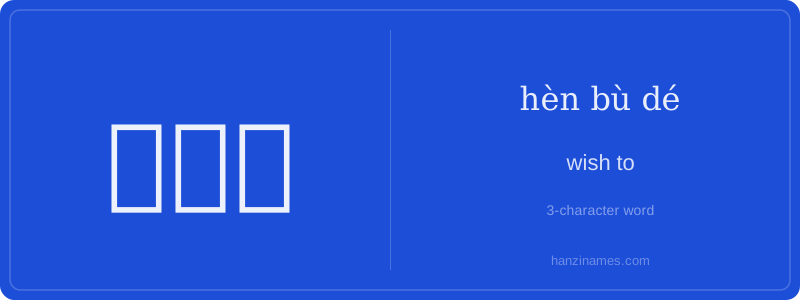
恨不得 is an expression that conveys a strong desire or wish to do something, often used when the speaker feels frustrated or eager. It implies a sense of longing or urgency, typically in situations where the desired action is not possible or delayed.
The character 恨 (hèn) means 'to hate' or 'regret,' but in this context, it intensifies the emotional weight of the phrase. 不 (bù) means 'not,' and 得 (dé) is a complement particle that indicates possibility or ability. Together, they form an expression that reflects a deep yearning, even if it's not achievable.
It is commonly used in spoken Chinese to express frustration or eagerness, such as wanting to act quickly or achieve something immediately. This phrase is particularly useful in daily conversations and can be found in literature, media, and informal speech. Understanding its usage helps learners grasp nuanced expressions of emotion and intention in Chinese.