卑职
How to Say
👀 0
How to Write
Meaning: humble servant
How to Understand
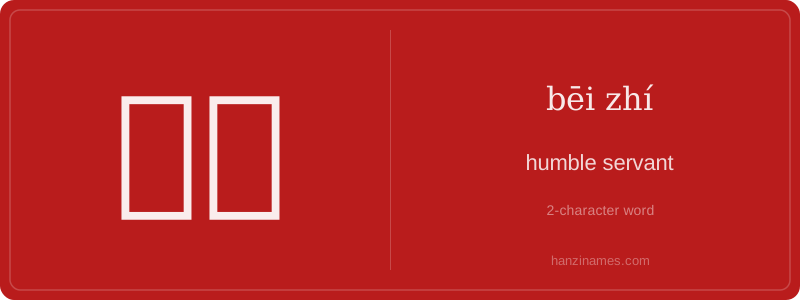
卑职
卑职 is a humble self-referential term used in classical or formal Chinese, typically by subordinates addressing superiors. It conveys deep respect and modesty, reflecting the Confucian values of hierarchy and humility.
The character 卑 (bēi) means 'humble' or 'lowly,' while 职 (zhí) means 'duty' or 'position.' Together, they form a term that literally means 'humble duty,' emphasizing the speaker's low status and sense of responsibility.
Though rarely used in modern spoken Chinese, 卑职 appears in historical texts, legal documents, and traditional dramas. It is often replaced today by more neutral terms like 我 (wǒ, 'I') or 我们 (wǒmen, 'we'), but its use in literature or formal settings can add authenticity and cultural depth.
Example Sentences
卑职今日奉命前来,敬请大人指教。
Humble servant has come today on orders; please guide the elder.
卑职虽才疏学浅,仍愿竭尽全力效劳。
Humble servant may lack talent and learning, but still wishes to do one's best in service.