寄生
How to Say
👀 0
How to Write
Meaning: parasite
How to Understand
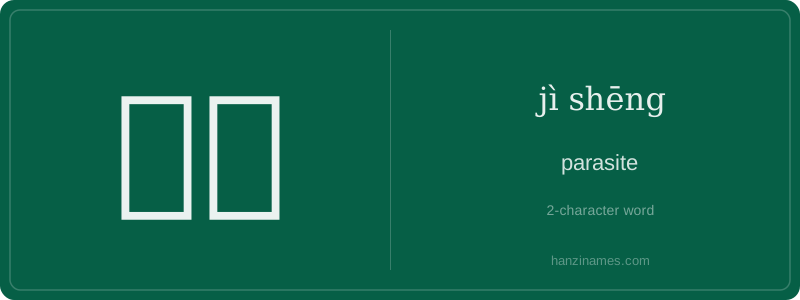
寄生
寄生 (jì shēng) refers to a parasite, an organism that lives on or in a host organism and benefits at the host's expense. It is often used metaphorically to describe someone who relies on others for survival or advantage.
The character 寄 (jì) originally meant 'to entrust' or 'to rely on,' while 生 (shēng) means 'life' or 'to live.' Together, they convey the idea of relying on another life form to survive, which aligns with the concept of parasitism.
寄生 is commonly used in both biological and figurative contexts. In Chinese culture, it can describe people who exploit others without contributing, similar to the English term 'parasite.' It is also used in literature and daily speech to highlight dependency or exploitation.
Example Sentences
这种植物是寄生在树木上的。
This plant is parasitic on trees.
他是个寄生在家庭中的懒人。
He is a lazy person who lives off his family.