独立
How to Understand
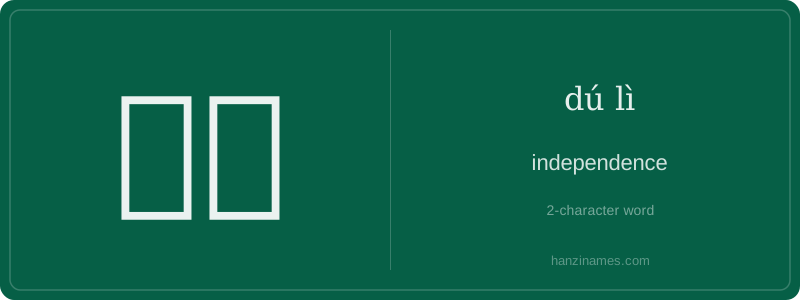
独立 refers to the state of being self-reliant or not dependent on others. It emphasizes autonomy and the ability to make decisions and act without external influence. This concept is often contrasted with dependence or reliance on others.
The character 独 (dú) means 'alone' or 'single,' and 立 (lì) means 'to stand' or 'to establish.' Together, they convey the idea of standing alone or establishing oneself independently. The word has roots in classical Chinese literature, where it was used to describe moral and intellectual self-sufficiency.
Independence is a highly valued trait in many cultures, especially in contexts like personal development, politics, and business. In China, it is often associated with national sovereignty and individual self-determination. Common expressions include 独立思考 (dúlì sīkǎo), meaning 'independent thinking,' and 独立自主 (dúlì zìzhǔ), meaning 'self-reliance.'