担当
How to Understand
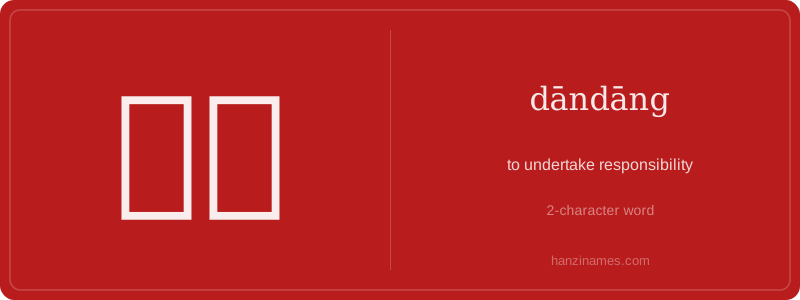
担当 (dāndāng) means 'to undertake responsibility' or 'to take on a role.' It emphasizes the act of accepting duty or obligation, often in a formal or significant context. Unlike similar terms like 负责 (fùzé), which focuses more on being responsible for something, 担当 implies a deeper sense of commitment and personal involvement.
The character 担 (dān) originally meant 'to carry' or 'to bear,' while 当 (dāng) can mean 'to be suitable' or 'to take the place of.' Together, they form a word that conveys taking on a heavy burden or responsibility, both literally and figuratively.
担当 is commonly used in professional, academic, and social settings. For example, a leader might be said to 担当 the responsibility of managing a project. In Chinese culture, taking on responsibility is highly valued, and 担当 reflects this cultural emphasis on duty and integrity.