梗概
How to Say
👀 0
How to Write
Meaning: outline; synopsis
How to Understand
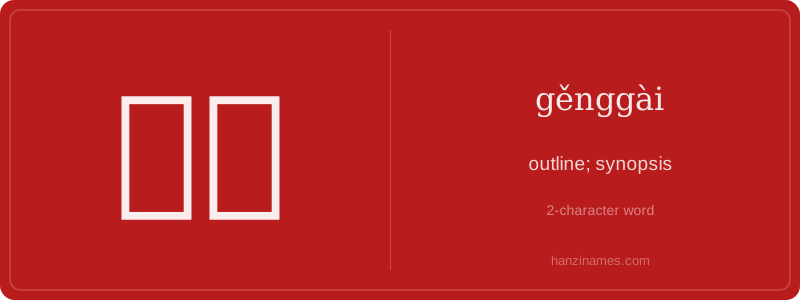
梗概
梗概 means an outline or synopsis, typically a brief summary of a longer text, story, or presentation. It is used to provide a quick overview without going into detailed content.
The character 梗 (gěng) originally meant 'stem' or 'trunk,' and later came to mean 'core' or 'main point.' 概 (gài) means 'general idea' or 'overview.' Together, they form a term that refers to the main points or structure of something.
梗概 is commonly used in academic, literary, and professional settings. For example, a teacher might ask students to write a 梗概 of a book, or a presenter might include a 梗概 at the beginning of a talk to guide the audience. It is also used in media to summarize news articles or movie plots.
Example Sentences
这篇论文的梗概可以帮助读者快速了解研究内容。
The outline of this paper can help readers quickly understand the research content.
电影的梗概在官方网站上可以找到。
The synopsis of the movie can be found on the official website.