恐怕
How to Understand
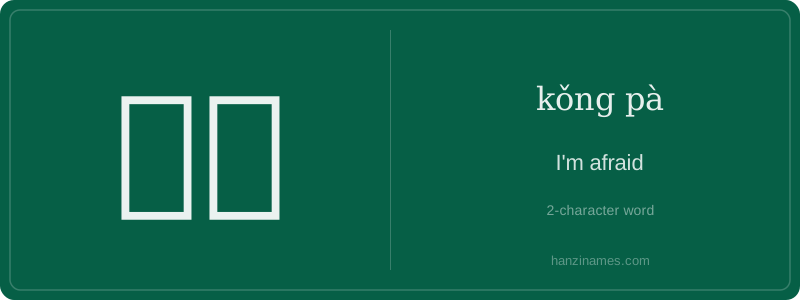
恐怕 (kǒng pà) is an adverb that expresses a sense of fear or uncertainty, often used to introduce a statement that may be unpleasant or unexpected. It conveys a mild hesitation or concern, similar to 'I'm afraid' in English.
The character 恐 (kǒng) means 'fear' or 'dread,' while 怕 (pà) means 'to be afraid' or 'to worry.' Together, they form a compound that emphasizes the emotional state of fear or apprehension.
恐怕 is commonly used in formal or polite speech to soften the impact of a statement, such as when delivering bad news or expressing doubt. It is often followed by a clause explaining what is feared, like 恐怕他不会来 (I'm afraid he won't come). The phrase is widely used in both spoken and written Chinese and reflects the cultural emphasis on politeness and indirect communication.