老板
How to Understand
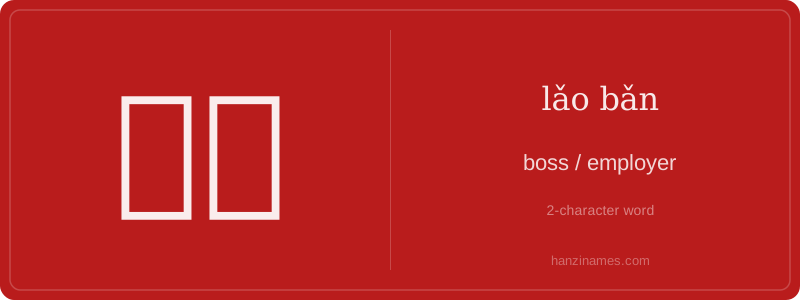
老板 (lǎo bǎn) is a common term for 'boss' or 'employer' in Chinese, typically used to refer to someone who owns or manages a business. It can also be used informally to address a person in authority, depending on the context.
The character 老 (lǎo) originally meant 'old' or 'elder,' but in this context, it often conveys respect or familiarity. 板 (bǎn) literally means 'board' or 'plank,' but in this compound, it refers to a person in charge or in control. Together, they form a term that implies leadership and authority.
老板 is widely used in both formal and informal settings, especially in workplaces. In some contexts, it may carry a tone of respect, while in others, it can be more casual. Understanding when to use 老板 versus other terms like 领导 (lǐngdǎo, leader) or 主管 (zhǔguǎn, supervisor) can help avoid misunderstandings in professional environments.