迷惘
How to Say
👀 0
How to Write
Meaning: Bewilderment
How to Understand
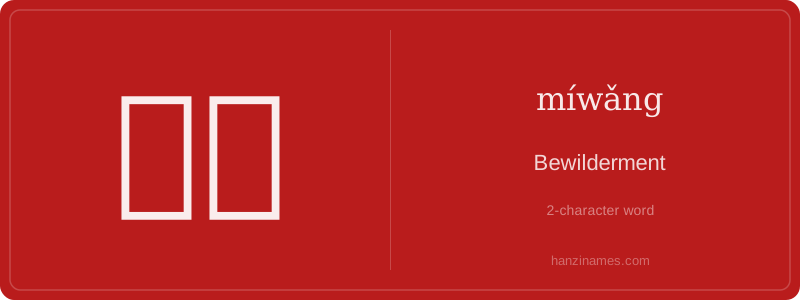
迷惘
迷惘 refers to a state of confusion or disorientation, often caused by uncertainty or a lack of clear direction. It conveys a deeper emotional and mental state than simply being lost, implying a sense of helplessness or迷茫 (mángmù) in one's path.
The character 迷 (mí) means 'to be confused' or 'to be lost,' while 惘 (wǎng) means 'to be unsettled' or 'to be in a daze.' Together, they form a compound that describes a mental state of being adrift or without clear purpose.
迷惘 is often used in literary or reflective contexts, describing personal struggles, existential crises, or moments of doubt. It is commonly found in poetry, novels, and philosophical discussions about life’s direction and meaning.
Example Sentences
他在人生的十字路口感到迷惘,不知道该往哪里走。
He felt bewildered at the crossroads of life, unsure of where to go.
面对突如其来的变故,她陷入了深深的迷惘之中。
Faced with sudden changes, she fell into deep bewilderment.